Last night I opened a bottle of Champagne Paul Lebrun Demi-sec. I felt like it. Usually rather a « brut » drinker, I admit that me, too, I sometimes need a little sweetness in my glass. That must be the romantic side of my palate ...
fruits exotiques
Shiny and golden, with very fine, creamy bubbles, the wine flirts with me from the very first minute. It exhales a delicate scent of red currants and fresh melon, a perfume that continues on the palate, enriched by a splash of lemon juice. Proud to be a semi-dry wine, it displays its 35 grams of sugar per liter without any complex. Featuring a fresh and tender balance, it ends up on juicy acidity. This Champagne is an endangered species, precisely because most people are like me. Dry bubbles are more fashionable at the moment.
WINE & FOOD MATCH FOR CARNIVORES & HERBIVORES
Those who sabre a bottle of this Champagne, should come up with a nice fruit salad and a certain sense for savory moments.
What do we actually expect from a Champagne? That he will amuse or even seduce our palate? Crispy acidity or rather softness? Flattering fullness or sweet or fruity or mineral aromas? Or a bit from everything?
Champagne Paul Lebrun
That might be the right answer, but it’s anything but easy to unite all these desires in each bottle of bubbles. Champagne is in fact no universal drink that meets all our needs whenever our brain starts to sparkle. The more character a champagne has, the more it will defer from our universal idea and take a stand. It is therefore appropriate to determine the right moment for tasting of each bottle of Champagne, just as we use to do for still wines...
I recently opened this bottle of Champagne Paul Lebrun Grande Reserve that has been lying in my cellar for a few months. It is a pure Blanc de Blancs, produced primarily from the 2009 vintage and from different vineyards of the Côte des Blancs and the Sézannais. While it is true that these wines do 95% of their aging in the cellars of Lebrun and completely are « ready to drink » when they leave them, these few months of extra rest after disgorging apparently were quite beneficial to the wine.
Champagne Paul Lebrun
Fine bubbles, plentiful and persistent, are giving much visual lightness to the deeply golden wine in the glass. The first nose, with its lush flavors of vanilla, hazelnut and fresh yeast, quickly opens in my WINE GLASS (down with champagne flutes, usually much too narrow to favor free aromatic expression of the wine!), displaying seductive aromas of white pepper and dried flowers. Creamy and smooth on the palate, with fresh acidity and slight saltiness, tangy lemon and delicately peppery on the long final. The empty glass shows freshly cut herbs and grass.
So, what should you do with this wine, and which is the right moment to enjoy it? Personally, I would drink it as an aperitif. Certainly, you may say that’s hardly a scoop regarding Champagne, but let me explain: The aromatics of this Champagne show a certain evolution and advanced maturity, remaining very interesting and showing a relatively great diversity. But its especially the smoothness and the full-bodied palate that require that this wine stands alone. What’s more, an accompanying dish could drown out the delicate flavors on the final.
Champagne Paul Lebrun Vintage Brut 2008 tasted by SommelierS International
Visual aspect: Pale yellow, golden color with silvery tinges. Nice brilliance and fine, persisting bubbles. Nose: Seducing and pleasant. Fragrances of fresh butter and nice minerality. Palate: Full-bodied and fresh. Very judicious « dosage », excellent balance, white fruits and minerality. Match with food: Salt-crusted poultry with parsley butter and steamed vegetables of the season. Comments: Flattering and promising Champagne. Benefits from decanting.
Each time someone says « Champagne » you’d rather think of words like “cuvée” and “blend” than « selection of terroir." And it’s true, we can consider the producers of champagne as being the « kings of blending ». Very few wineries and negociants propose indeed Champagne pure terroir, that derives from a single vineyard. Blended wines, made of grapes from different terroirs, different grape varieties, and different vintages are largely dominant on the wine market (only 10% of the regions production claims to be « Champagne millésimé », made from a single year’s harvest).
terroir champagne
In order to assess the expression of different terroirs in Champagne, there’s only one solution: we have to get to know a winemaker that invites you to taste the « base wines » in his cellar. The term "base wine » is given to all tanks, barrels and wine batches produced during the last harvest. Together with so-called « reserve wines », wines from previous vintages, cellared for two or three years, the base wines are used to create the different blends of the winery. During a visit in the cellars of Champagne Paul Lebrun in Cramant this winter, I obviously did not refuse when Nathalie asked me to discover their different terroirs by tasting her Chardonnay wines in the cellar. It’s never an easy exercise to taste very young wines, just a couple of weeks after fermentation. In addition, the base wines of Champagne rely on an acidity and minerality, which may surprise the palate.
First presses (plot on chalk in Barbonne Fayel): aromas of apricot, pineapple and confectionery, crisp, tangy and straight on the palate.
First presses (plot on flints in Saudoy): the overall impression is warmer and more generous, aromatic marked by apples and pears, round and delicious on the palate, a final marked by boxwood aromas.
First presses (Plot on chalk in a place called “Les Bercottes”): fine and elegant, soft, slightly minty and more discreet.
Second presses (terroir of Cramant): a more colorful wine, marked by flowery aromas, honey and beeswax, rich on the palate, smooth with mild acidity.
First presses (terroir of Cramant): fine, elegant, with a delicate, soft and rich aromatic of citrus fruits, lime, lychee, plum and fresh grapes ...
First presses (Vindey - terroir of Sézanne): complex, rich and ripe, with a fresh fragrances of mint, pears and butter, but also a high proportion of minerality and a slightly « smoky» on the final.
In general, the wines grown on chalk seemed to give more structure and minerality, whereas more clayey or sandy soils entrusted more generosity and maturity to the wines. At least in this tasting. We must nevertheless remember that terroir is not only about soils as climate, topography and water availability are equally important factors.
Champagne Paul Lebrun
For Nathalie these « taste trends » of different soils are nevertheless somehow confirmed annually, regardless to the vintage.
« Grapes from Cramant always confer a lot of elegance, finesse and minerality to the wines. These are wines that require patience, wines that love to spend a lot of time in the cellar. They are the ones that allow us to create our greatest Champagnes that perfectly suit for the table. In In comparison the Grapes from Sézannais, south of the Côte de Blancs, always show more maturity and generosity. They are more charming wines that better suit for an aperitif. »
As a resume I should say that I was pleasantly surprised, even amazed by the great diversity of tastes expressing the terroirs of Champagne.
SommelierS international says: #Champagne Paul Lebrun Prestige - It’s all finesse and elegance
WHAT AND HOW ?
Visual aspect : golden yellow colour, beautiful brilliance. Fine bubbles. Nose : fresh, pleasant. Notes of pears and greengage. Palate : pure, very different from the nose, peaches and a hint of lemon. Beautiful finish. Match with food : aperitif, tartar of monk fish and marinated salmon. Comments : It’s all finesse and elegance.
WHEN AND WHERE ?
The castle of Pierry, an 18th century country seat, has been the beautiful setting of SommelierS International’s latest tasting (in november 2014), dedicated to Winegrowers’ Champagnes. About 200 cuvées crafted by Champagne winegrowers were tasted in the Kings Gallery of the castle in the presence of Serge Dubs and Philippe Faure-Brac, both best Sommelier of the World, as well as Michèle Chantôme, président of the sommeliers of Morocco.
Wine from Champagne becomes popular at the French and the English court during the XVII. Century. At this time the wines are without any bubbles and sometimes red.
Champagne - le vin du diable
Rather light and poorly structured, their storage in oak barrels doesn’t always work out as desired. A major dilemma for the wine growers. Fortunately, the British diplomat Sir Kenelm Digby invents the wine glass bottle in 1632. A great relief for the winemakers, who trust cork sealed glass bottles for wine storage rather than unreliable oak barrels from now on. Furthermore, early bottling of the wines has the advantage that freshness and flavours are well preserved. But there are also disadvantages. The wines tend to finish fermentation of residual sugars in the spring. This liberates carbon-dioxide in the bottles and the still wines mute to sparkling. At least as long as the cork resists to the rising pressure the bottles will not explode. Due to this “suicidal tendencies” the wines acquire the title of “the Devil’s wine” amongst producers. But the English love those new wines! That much, they bring it over to England in barrels, just to re-ferment it in bottles. They even add in sugar to get more “bubbles”. Thus, we might admit, that English wine-lovers lay the foundation for a second fermentation, still used in modern “Méthode Champenoise” (with a little more expertise than 400 years ago of course).
Champagne - Dom Pérignon
It was the famous monk from Hautvilliers Dom Pérignon (1638 - 1715) himself, who began to organise the manufacturing process of sparkling wines, bringing home some ideas he got on a pilgrimage to Limoux in southern France, where the still famous “Blanquette de Limoux” was already made for quite some time. For instance, he generalizes the use of “assemblage” in Champagne (assemblage = blending different grapes, origins or even vintages. In France, the latter is only allowed for Champagne!). He also orders pressure-resistant bottles made of thicker glass and fixes the cork during secondary fermentation with a string of hemp. Despite all this, it takes another two centuries, before Louis Pasteur reveals the mystery fermentation and to improve the process of making Champagne…
Nowadays, Champagne mainly uses three varieties to make its wines: Pinot Noir, Pinot Meunier and Chardonnay. The wines are blends for a large part: Different varieties, different terroirs, several vintages. Of course varietal champagne also exists (the famous “blanc de blancs” for example, only made from Chardonnay), as well as vintage Champagne, made from grapes exclusively picked in a specific year (about 10% of total production).
vignoble champagne
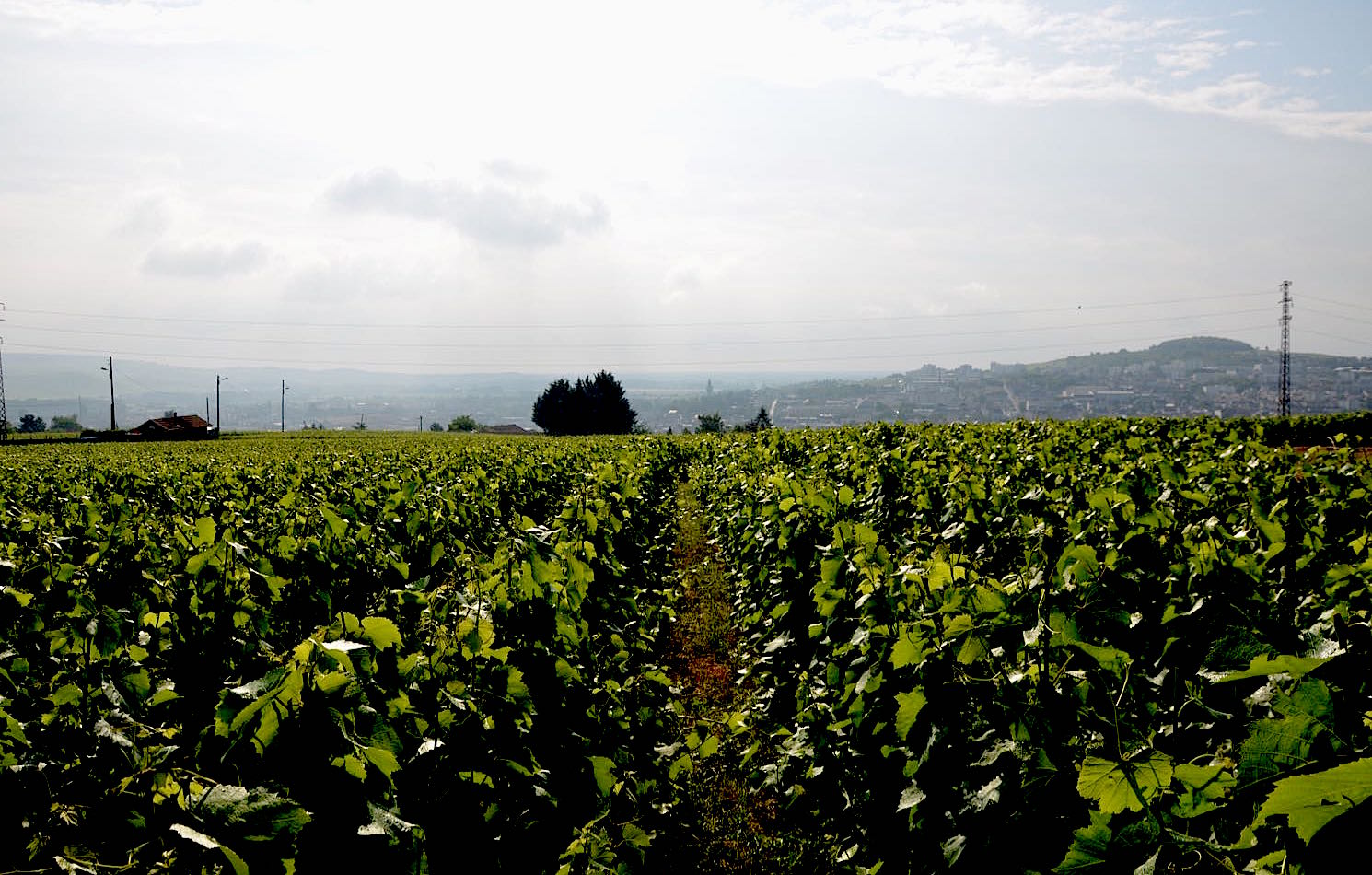
Geographically, we distinguish 4 terroirs, which may all produce Champagne:
The “Montagne de Reims” with its chalky subsoil and Pinot Noir planted as the main grape variety. The “Vallée de la Marne”, whose soils of limestone, clay and marl (“marnes” in French) are planted mainly with Pinot meunier. The “Côtes des Blancs” south of Epernay, whose chalky soils point out the excellence of Chardonnay grapes. The “Côte des Bar”, situated in the more southern department “Aube”, with its marly soils and Pinot noir vines.
A good glass of... Cuvée Prestige from Paul Lebrun
Ah, “bubbles”! That feels good! But of course, this wine has much more to offer. Elegance in the first place: pears in syrup, vanilla cream with hazelnuts, dried flowers and fresh blossoms. A very fine bouquet, marked by time and maturity. A true lady!
Pleasant, fine bubbles on the palate, medium-bodied with surprisingly tangy acidity. This is typical of Chardonnay. Or more precisely, typical of Chardonnay from Cramant, because the vines from which this Champagne is made grow on the white chalky soils of the Côte de Blancs.
For Nathalie Vignier wines from Cramant are always characterized by a strong minerality that gives some tension on the palate. “Pure Cramant Champagne requires patience. It must be polished by time, it needs to ripen.”
After partial fermentation and ripening in oak barrels, followed by four years of bottle aging on fine lees in the cool cellars of the winery, the wine has reached its full maturity. Instant pleasure guaranteed!
HERBIVORE SUPPORT: Fried, fresh porcini mushrooms on a parsnip puree with Garam Masala, or a good piece of Brie de Meaux on fig bread. CARNIVORE SUPPORT: bass fillet with cinnamon, sauerkraut with fish and “beurre blanc”, poultry with vanilla cream sauce ...



 RSS
RSS