Enjoyement levels in the ‘14s are high. The cool summer, with pockets of rain, ensured that most wines are fresh, have moderate alcohol, and are what the French call digeste – easy to drink. Accurate expressions of terroir are always well propted in such circumstances, in contrast du the heavily sunny vintages, which spend years shaking off their thick, ripe coating from the summer climate.
Domaine Santa Duc, Gigondas Clos Derrière Vieille
Inky, really deep, black-fruited nose. Silken, pure, expressive palate, has crunch and glow in its tannins. Drink 2019 – 2032.
a few days before harvest, we would like to share some thoughts about the vintage 2014, a crucial year in our wine production. During the last harvest, we fermented several tanks and even some barrels of the Cuvée GC without addition of sulphur. Approximately 70% of our grapes were transformed into wine by natural yeasts through this vinification “without safety net”. Today, almost twelve months later, the reaction of the wines is still surprising: The expressiveness of the fruit is amazing, the grapes dominate everything.
Added sulphur acts like an antibiotic, standardizing the wines. We started our experiments with sulphur-free wine making already in 2004. It’s above all a learning process, not only in the cellar, but also in the vineyard, as only healthy and balanced grapes, here from organic farming, allow making choices.
degustation Pascal
Breaking free from sulphur under appropriate precautions opens new perspectives of wine quality. One discovers an unsuspected range of aromas (sulphur covers the flavours), tannins of great delicacy and a large ageing potential, because everything has been done to give the wines a natural resistance to oxidation. In addition, the wines seem to be much more digestible.
The balance of the first decade of sulphur-free winemaking is very positive and encouraging. The vintage 2014 even gave us the possibility to produce a first, new sulphur-free wine. A Cahors “Extra Libre” (Extra free) that will be available from October. A truly charming, elegant and soft wine, made from the same vineyards as the “classic” Château du Cèdre. A wine that encourages us to continue on the path we choose over the next few years, towards ever-lower sulphur addition in all our wines.
We wish you a pleasant autumn,
Sincerely yours,
Pascal and Jean-Marc Verhaeghe
Santa Duc - Looking back on the 2014 vintage in the #Rhône
Last year we had a late maturing vintage. In the area around Gigondas, Plan de Dieu, Rasteau ... there was little rainfall in September, so we could serenely wait for the full maturity of the grapes. The last fruit finally reached our cellar on October 10th.
Being convinced that terroir and fruits produce the taste of wine, we intervene in the production processes as sparingly as possible. Its our main concern to preserve the overall quality of the grapes. For this purpose, we carefully sort out ripe and aromatic fruits, let fermentations be done by natural yeasts; and adapt maceration and extraction to overall tannin quality of the grapes.
At the beginning of the cellar work, when we put the crop into the tanks, we will add moderate amounts of sulphites, to prevent the development of undesirable yeasts. This agreement fits well with our philosophy, because we are neither friend nor foe of sulphites and adjust the application to the needs of each vintage and each tank. The oxygen sensitivity of different grape varieties, the frequency of racking to separate the wines from their lees, the topping of the barrels and the constant temperature of our cellar are, among other things, important factors for a harmonious and secure development of each wine. Only the sum of all factors allows the wine to evolve towards harmony of taste and will freely express the character of its origin.
In recent years, we focussed on the pursuit for a pure and noble expression of fruit and terroir. Oak, therefore, still plays an important role in the maturation of the wines. The regular topping of the barrels and the migration of tannins from oak to the wine allow a moderate but controlled oxygen supply, which is essential for a “fragile” varieties as the Grenache. The majority of our small barrels have recently been replaced by large oak vats. This changed the balance of power between wood and wine consideralbly. It seems essential to us, that the latter always has the upper hand.
In the continuity of this work, our cellar welcomed this year three 800-liter clay jars from Impruneta. In this stronghold of pottery near Florence in Italy a special type of clay, particularly suitable for the manufacturing of earthenware jars for wine and olive oil has been mined for many centuries. The hand-made jars have a completely smooth surface on the inside, and the clay allows the maturation of wines without any supply of tannins and flavours, while their special shape favours the expression of fruit and minerality. For this first year, a pure Grenache from La Crau in Chateauneuf-du-Pape and a Mourvedre from the terroir of the Hautes Garrigues in Gigondas will be ageing in these jars.
A good glass of... #Cahors Extra Libre (Extra Free) 2014 without sulphites from Pascal & Jean-Marc Verhaeghe
Does wine need more freedom? We do not have an answer yet. If we intervene as little as possible in the cellar, we nevertheless keep a close watch on our wines and the creation of our Cahors Extra Libre became possible only after years of preparation in the vineyards.
Being a free wine, the Cahors Extra Libre immediately shows its (black) colour. Wild berries, spices and pipe tobacco ... a seemingly indomitable bouquet. At ease in the glass, it quickly moderates its temper, showing more fruit and delicate fragrances of violet and elderflower. On the palate the wine surprises as much, appearing airy as well as dense and compact. However, though extremely delicate, the wine never tries to deny its roots from Cahors, as coined by the spiciness and cedar wood character on the final.
A wine that surprises us by its expressiveness and its diversity, sticking close to its origin and grape variety. He’s definitely free, this Cahors ...
A good glass of... #Minervois Tradition 2014 from Pierre Cros
It almost seems a bit silly to point out that a wine comes up with aromas and taste of fresh grapes. Isn’t that obvious? Well, it’s not that obvious at all, because through maturity, vinification and aging certain wines may somehow drift away from the initial raw material. Thus, their bouquets suggest a big amount of fruits (peach, apricot, fig, banana ...), spices (cinnamon, vanilla, pepper, star anise ...) and even plants (fern, mint, hay ...), thus hiding the grapes.
Domaine Pierre Cros
This is not so in this case. This wine is pure grapes! I even hear hear the crunching of the berries in my head at each sip. Being a good ol’ traditional Languedoc wine, it’s manly made of CARIGNAN, GRENACHE and CINSAULT, nevertheless authorizing the grandiose SYRAH to participate in the feast. A few months of ageing in concrete tanks protects the wine from outside temperatures in a natural way, preserving freshness and authenticity.
Fresh grapes, cherry, currant and strawberry, as well as a tad of elderberry wood and that’s it! Smooth on the palate, with crisp acidity and fine, low profile tannins. Generous and fluid, it will help all CARNIVORES to finish the BBQ season. During fall, with its rain and decreasing temperatures, it will enhance the taste of a coq au vin or add a little sunshine to a risotto with sun-dried tomatoes and prosciutto. Being a true multi talented wine, it will also offer many opportunities for HERBIVORES to feast: the first fried mushrooms, penne all’arrabiata, risotto with porcini mushrooms… You name it!
A good glass of... Château du Cèdre blanc 2014 #Viognier
During a visit in Cahors, I had the privilege of doing a « prerelease tasting of Château du Cèdre’s white wine. This pure Viognier fermented and aged in 500 liters barrels, has been preciously kept on fine lees for 9 months. Bottled next month, it will be available in September.
Chateau du Cèdre Blanc
The nose, first kept discreet by the presence of the fine lees, shows amazing aromas of honey and beeswax. With a little air and opens up in the glass, showing more and more fruit with notes of apricot and white peach, but mostly develops increasingly, powerful fragrances of lilac and elderberry.
Soft and elegant on the palate, it shows a very nice freshness, underlined by tasty “saltiness”.
HERBIVORE SUPPORT
Its aromatic diversity, as well as its roundness and the long salty final, this wine will make a great companion for various fresh and slightly aged cheeses: Brillat-Savarin, Chaource, Rocamadour ... After a couple of months of bottle aging, try it on a Rigotte de Condrieu, a tasty goat cheese produced on the soils of the Pilat mountains in the northern Rhône area.
CARNIVORE SUPPORT
Sweet water fish, crayfish, but also a chicken supreme on lemon butter, accompanied by snow peas. Keep it simple, using rigorously tasty ingredients!
Pascal Verhaeghe’s short review on vintage 2014 in #Cahors
Early bud burst announced a precocious vintage last spring. Excellent weather conditions were favourable to flowering, suggesting a good upcoming harvest.
Malbec
June and July were wet, with an important number of rainy days rather than high pluviometry. Summer finally began in the first days of August and lasted until the end of October, allowing optimum ripeness.
After a very tense early summer, grapes were finally picked with a smile, in a relaxed working atmosphere.
The wines issue from this harvest show high density, crispy freshness and great finesse.
A great vintage for sure.
How is my Malo doing...? What does that mean? #wine
November and december are MALO months! No relation at all to the French seaside resort of Saint Malo. The MALO I’m talking about takes place in the cellar, in tanks or in barrels. I’m talking about malolactic fermentation, in France also called FML (fermentation malo-lactique) or just MALO.
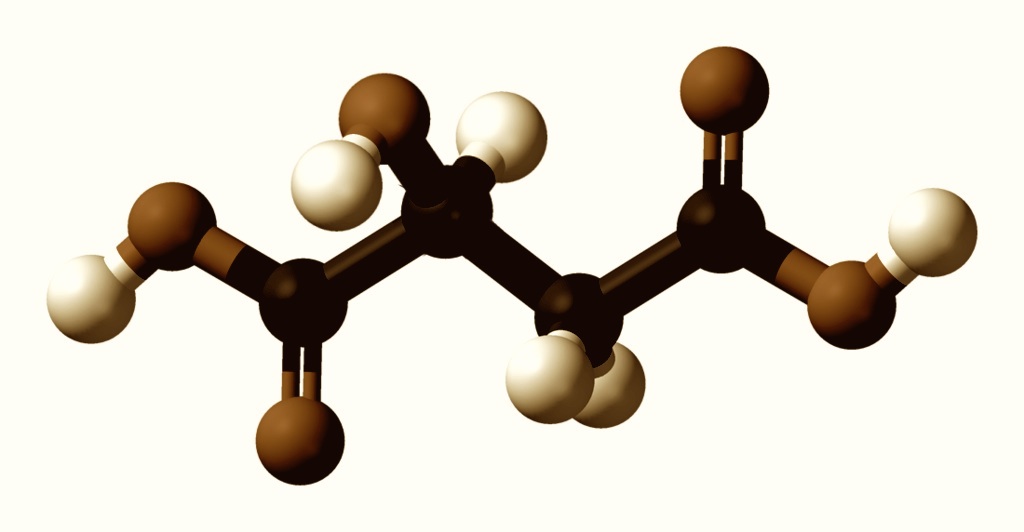
MALO ideally begins after the alcoholic fermentation. The latter is carried out by yeasts, which feed on sugar and produce alcohol and a whole bunch of aromas. MALO is done by bacteria (lactic acid bacteria more precisely). Like yeasts, lactic acid bacteria (we will call them LAB here) are a natural part of the wine world (they are just everywhere! In the vineyard, on grapes, in the pumps, on the floor, on the ceiling...). MALO can therefore start spontaneously, without having to intervene. Of course, you can also start it by adding LAB to the wine. LABs favorite food is malic acid. It’s a strong acid, which comes from the grapes. LABs would kill for malic acid and by eating it all, they make it disappear from the wine. More exactly, the malic acid is converted into the much milder lactic acid and some aromas by the LAB metabolism. Wines therefore often taste softer and may have gained aromatic complexity after MALO.
For red wine you make sure that the MALO always takes place. For white or rosé, the decision is not always easy. To obtain balance in those wines, it may sometimes be of advantage to preserve malic acid. In these cases: NO MALO! We block MALO by adding sulfites (which kill the bacteria), through sterile filtration (which take them out), or by low temperature (LABs like temperature above 20°C). Whatever technique is used, the most important is that MALO doesn’t occur after bottling. Because a wine that “does its MALO” (il fait sa Malo) just isn’t very tasty...
Nathalie in the Champagne (sometimes) does MALO on her wines. Even if straight and mineral acidity is primordial to the balance of Champagne, MALO may smoothen the wines in a pleasant manner. And let’s not forget the increased aromatic complexity.
“But often the wines decide themselves, whether they perform MALO or not,” says Natalie. “Wine is a natural product and therefore it does not always come to our doings, how it develops. Vintage, maturity, tanks, barrels… many factors play a role”.
Depending on the blend, Pascal Verhaeghe may prefer to let MALO be done in more or less large oak barrels and tanks.
“This has several advantages: The wines are smoother and softer and the woody character just seems to fit better into the wine”"




 RSS
RSS